

Cancer care is one of the most personal journeys a person can face, and the decision of where to receive radiotherapy is rarely taken lightly. In recent years, Türkiye has quietly become one of the more compelling destinations for international patients seeking advanced radiation oncology — combining modern equipment, experienced radiation oncologists and medical physicists, coordinated multidisciplinary teams, and a treatment pathway that is often faster and more transparently priced than in many other countries.
This guide walks through what is typically available in Türkiye's radiotherapy centres, how techniques such as IMRT, IGRT and stereotactic radiosurgery fit into modern care, where proton therapy currently stands, and the practical questions international patients should ask before booking a trip.
Why Türkiye Has Become a Hub for Precision Oncology
Türkiye's rise in medical tourism is not limited to hair transplants and dental work. Over the past two decades, a cluster of academic and private hospitals in Istanbul, Ankara and Izmir has invested heavily in radiation oncology infrastructure. Today, many of these centres operate linear accelerators equipped with image guidance, multileaf collimators, respiratory gating and treatment-planning software that supports intensity-modulated and volumetric arc techniques.
Several factors drive this. Türkiye has a large domestic cancer burden, which means its clinicians treat high volumes of patients every year. High-volume experience tends to sharpen technique. Turkish radiation oncology departments also participate in international conferences and collaborations, and many senior oncologists and medical physicists have trained or worked abroad, including in Europe and North America.
The result for international patients is a landscape where advanced radiotherapy is not an exception — it is increasingly the standard. A patient arriving from the Gulf, the Balkans, Central Asia or even Western Europe can often access treatment protocols that mirror what is offered in major Western cancer centres, at a lower cost and frequently with shorter waiting times.
Understanding the Technology: LINACs, IMRT, IGRT and Stereotactic Techniques
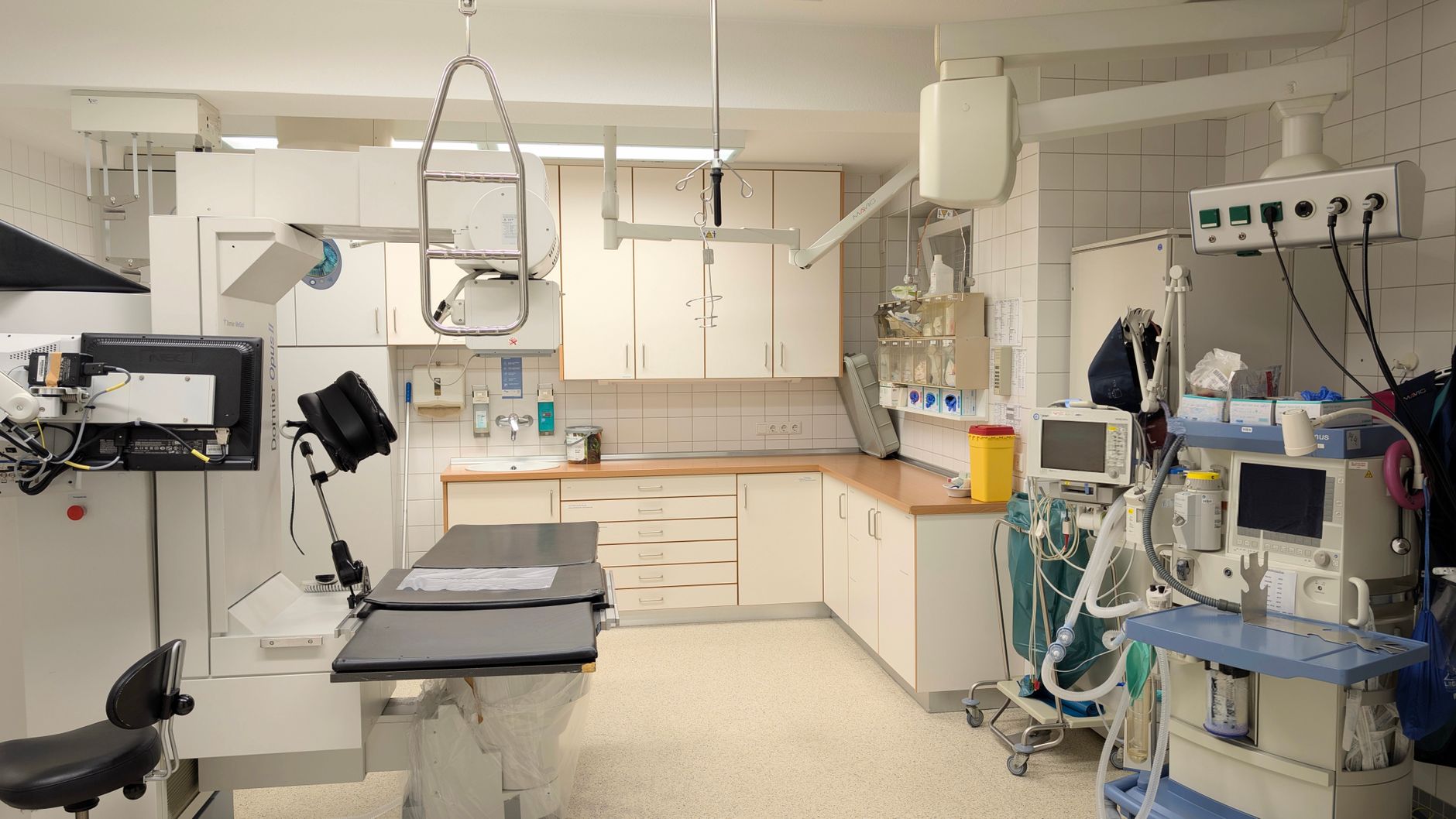
The backbone of modern radiotherapy is the linear accelerator, or LINAC. These machines generate high-energy X-ray beams that are shaped and aimed at a tumour. Modern LINACs in Türkiye's centres are typically equipped with onboard imaging, which allows the treatment team to verify the patient's position immediately before each session.
IMRT (Intensity-Modulated Radiation Therapy) allows the beam intensity to be varied across the treatment field. Instead of a uniform dose, the radiation is sculpted so that the tumour receives a high dose while nearby healthy structures — the spinal cord, optic nerves, salivary glands, bladder, rectum or heart, depending on the site — receive as little as possible. IGRT (Image-Guided Radiation Therapy) complements this by using imaging at the time of treatment to account for tiny day-to-day shifts in tumour or organ position.
On top of these, many centres offer stereotactic radiosurgery (SRS) and stereotactic body radiotherapy (SBRT). These techniques deliver very high doses in a small number of sessions with sub-millimetre precision, and are commonly used for selected brain tumours, early-stage lung tumours, prostate cancer, liver lesions and spinal metastases. VMAT and RapidArc-style rotational delivery are also widely available, allowing treatments to be completed in just a few minutes per session.
For patients whose tumours move with breathing — such as lung or liver tumours — respiratory gating, breath-hold techniques or abdominal compression may be used. These tools are not gimmicks; they directly influence how tightly the radiation can be shaped around the target.
Technology matters, but it is only half the story. The skill of the radiation oncologist in defining the target volume, and the medical physicist in commissioning and verifying the plan, is what turns a machine into a treatment.
Where Proton Therapy Fits In — and What Is Currently Available
Proton therapy is a form of particle radiotherapy that uses protons rather than X-rays. Because protons deposit most of their energy at a precise depth — the so-called Bragg peak — and then stop, they can spare surrounding tissue more effectively than conventional photon-based radiotherapy in certain situations. It is particularly discussed for paediatric tumours, tumours near critical structures such as the brainstem or optic chiasm, base-of-skull tumours, some sarcomas and selected head-and-neck or central nervous system cases.
It is important to set expectations clearly. Proton therapy is not automatically "better" than IMRT or SBRT for every cancer. For many common tumours — early prostate cancer, most breast cancers, many lung cancers — high-quality photon-based IMRT or SBRT produces excellent outcomes, and the difference in side-effect profile may be small. Proton therapy is generally most valuable when sparing healthy tissue is the dominant clinical concern.
Türkiye's proton therapy footprint has been developing gradually, with academic and private institutions announcing proton and particle therapy projects and partnerships. Because availability, indications and capacity can change, international patients should verify the current status directly with the treating centre rather than relying on older media reports. If proton therapy is part of your treatment plan, ask whether it is delivered on-site, in collaboration with another facility, or whether an equivalent photon-based technique would be equally appropriate for your case.
A sensible approach is to ask your treating radiation oncologist whether proton therapy offers a meaningful clinical advantage for your specific diagnosis, stage and anatomy — and to request a comparison of dose distribution to critical organs under both proton and photon plans.
Multidisciplinary Tumour Boards and Coordinated Care
One of the most valuable features of Türkiye's larger cancer centres is the multidisciplinary tumour board. In these meetings, radiation oncologists, medical oncologists, surgeons, radiologists, pathologists and sometimes nuclear medicine specialists review complex cases together and agree on a recommended treatment sequence — for example, whether to operate first, whether to give chemotherapy before or after radiotherapy, or whether concurrent chemoradiation is appropriate.
For international patients, this matters enormously. Cancer treatment is rarely a single decision. A coordinated board reduces the risk of fragmented care, where each specialist recommends only their own modality. It also gives the patient a single, coherent plan written in plain language, which can be shared with their oncologist at home.
Many Turkish hospitals that serve international patients provide a case manager or international patient coordinator who arranges imaging, pathology review, consultations and treatment scheduling. Some centres offer second-opinion services remotely, where you can submit your scans, pathology reports and clinical summary and receive a written multidisciplinary opinion before deciding to travel.
Scheduling, Waiting Times and Practical Logistics
Appointment scheduling is one of the clearest practical advantages. In some public health systems, patients can wait several weeks for a radiation oncology consultation and longer for treatment planning and start. In Türkiye's private and university hospitals, international patients can often be seen within days of submitting their records, with simulation and planning typically following within one to two weeks.
Radiotherapy itself is usually delivered on an outpatient basis. A standard course of IMRT might involve 20 to 35 sessions over four to seven weeks, with each session lasting around 10 to 20 minutes on the machine. Stereotactic treatments are much shorter — often one to five sessions. Patients generally do not need to be admitted to hospital for radiation alone, though some may stay for concurrent chemotherapy or supportive care.
Istanbul is the most common gateway for international patients, with direct flights from a large number of cities. Ankara and Izmir also host major oncology centres. Many hospitals offer airport transfers, translation services in Arabic, English, Russian, German and other languages, and assistance with accommodation near the hospital. It is worth asking whether the quoted package includes planning scans, dosimetry, daily treatment, weekly on-treatment reviews and follow-up imaging.
Cost Transparency and What to Ask Before You Commit
Cost is a legitimate and important consideration. Radiotherapy in Türkiye is generally significantly less expensive than in the United States and often lower than in Western Europe, though prices vary widely depending on the technique, the number of fractions, the hospital and whether chemotherapy or surgery is included.
A good centre will provide a written estimate that breaks down the components: consultation, imaging and simulation, treatment planning, daily fractions, image guidance, on-treatment reviews and follow-up. Ask explicitly whether image guidance, respiratory gating, stereotactic delivery or proton therapy carries additional charges, and whether there are separate fees for the radiation oncologist, the medical physicist and the hospital facility.
You should also clarify what happens if your treatment plan changes mid-course — for example, if the tumour responds differently than expected or if you need a replan. Centres should explain how variations are handled and whether the estimate is fixed or an indicative range.
Finally, remember that cost should not be the only criterion. Ask about the centre's experience with your specific cancer type, the availability of modern equipment, the qualifications of the radiation oncologists and medical physicists, and whether they routinely participate in multidisciplinary tumour boards.
Questions to Bring to Your Treating Team
Whether you are considering treatment in Türkiye or at home, the same questions apply. What is the goal of radiotherapy in my case — curative, adjuvant or palliative? Which technique is most appropriate, and why? What dose and fractionation schedule is proposed? What are the expected acute and long-term side effects? How will my position and the tumour's movement be verified each day? Is there a clinical trial or an emerging technique I should consider?
If you are exploring Türkiye, ask for a written treatment plan that you can share with your oncologist at home. A second opinion is not a sign of doubt — it is a sign of diligence. Centres welcome it.
Radiotherapy is a field where precision, experience and coordination genuinely affect outcomes and quality of life. Türkiye's advanced radiotherapy centres now offer all three at a scale that makes them a credible option for international patients. The right next step is a conversation — with your own treating team, and with a centre that can explain, clearly and honestly, what it can offer for your specific situation.
تفكر في رحلة إلى تركيا؟
أرسل لنا سؤالاً حول هذا الموقع أو حول المعلومات المنشورة عليه. هذا صندوق بريد ناشر، وليس خدمة طبية وليس طريقاً إلى مزود معين — للأسئلة السريرية، اتصل بطبيبك الخاص.