

From Paper Files to Secure Digital Access
For years, medical travellers leaving Türkiye carried a folder of printed reports, imaging films and handwritten prescriptions home in their luggage. Today, that bundle increasingly travels in a secure digital record instead. Türkiye's health system has been steadily widening the use of electronic patient records, and private clinics serving international patients are following suit.
For returning travellers, the practical benefit is straightforward: test results, operation notes and discharge summaries can be accessed online, often through a secure patient portal, rather than waiting for documents to arrive by post or email.
The shift mirrors a broader global trend. Health systems in Europe, the Gulf and North America are moving toward patient-accessible digital records, and Türkiye's international patient departments are adopting similar tools to stay competitive and reassuring.
Results You Can Reach From Home
Many travellers schedule follow-up blood tests or imaging shortly before flying home, or leave samples behind for processing. With digital records, those results can be released to a secure portal that the patient opens from their own country.
That matters most for procedures where timing is everything — post-operative blood work, pathology reports or implant checks that a home physician needs before adjusting medication or planning rehabilitation.
Rather than chasing paperwork across time zones, patients can download a report and hand it directly to their GP or specialist. The convenience is real, but so is the clinical value: fewer delays in sharing information mean fewer gaps in care.
Staying in Touch With Your Turkish Clinic
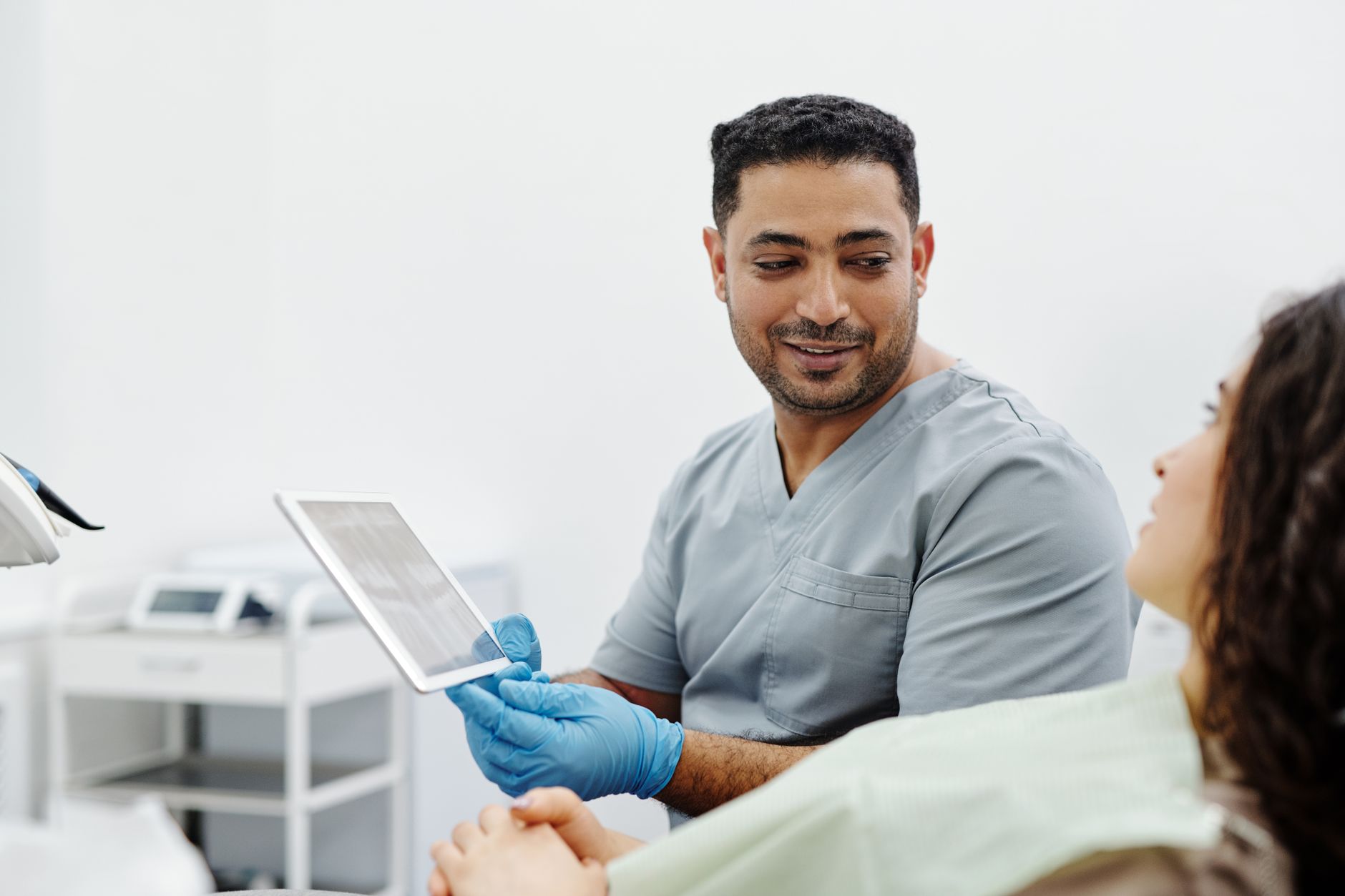
Digital records are part of a wider set of communication tools that Turkish clinics have refined for international patients: secure messaging, video follow-up appointments and email correspondence with coordinators who speak the patient's language.
After returning home, a patient can send a photo of a healing incision, ask a question about medication and receive a written answer that becomes part of the record — all without an international phone call at an inconvenient hour.
These channels are not a replacement for local medical care. They are a bridge: a way to keep the Turkish treatment team informed while the patient's own doctor manages day-to-day recovery.

Continuity of Care, Not Just Convenience
The deeper benefit of digital record-keeping is continuity. When a patient's history — imaging, lab values, operative details — is accessible in one place, a physician at home can make decisions with better information.
Turkish providers increasingly encourage patients to share access with their local doctor, and some offer summaries translated into English or other languages. This helps close the loop between the treatment abroad and the care that follows.
For patients, that continuity translates into peace of mind: the sense that the episode of care did not end at the airport, and that someone on the clinical team can still answer a question weeks later.

Privacy and Security Remain Central
Health data is sensitive, and travellers should treat digital records with the same caution they would apply to banking information. Reputable clinics use secure, password-protected portals rather than ordinary email attachments for detailed reports.
Patients are advised to ask, before treatment, how records will be shared, who can access them and how long they remain available. Clear answers to those questions are a good sign of a well-organised international patient service.
Travellers should also keep their own copies — downloaded and stored safely — so that access does not depend on a single portal or a clinic's retention policy.
What This Means for Medical Travellers
Türkiye's digital health push does not change the fundamentals of medical travel: choosing a reputable provider, understanding the procedure and planning recovery remain essential. What it changes is the aftermath — the paperwork, the phone calls, the uncertainty about whether a report ever arrived.
For travellers considering treatment in Istanbul, Ankara or Izmir, it is worth asking prospective clinics how they handle digital records and follow-up communication. A clinic that can explain its portal, its messaging channels and its process for sharing results with a home physician is likely to be well prepared for the questions that arise after departure.
In an industry built on trust across borders, that kind of organised, accessible follow-up is a meaningful reassurance — and a quiet sign that medical travel is maturing into something closer to seamless care.
Thinking about treatment in Turkey?
Send us a question about this site or about the information published on it. This is a publisher's mailbox, not a medical service and not a route to a particular provider — for clinical questions, contact your own doctor.