

Why Language Matters in Surgical Consent
Informed consent is far more than a signature on a form. It is a conversation — a legal and ethical process in which your physician explains the diagnosis, the proposed procedure, its risks and benefits, reasonable alternatives, and what might happen if you choose no treatment. Only when you genuinely understand all of this can your consent be considered valid.
When the patient's language is not Turkish, that conversation must be bridged with professional language support. Turkish hospitals accredited by international bodies such as the Joint Commission International (JCI) and the Turkish Ministry of Health's international patient departments treat language access as a patient safety issue, not a courtesy. Clear communication is the foundation of a safe operation — and Türkiye has built one of the world's most structured systems for it.
This guide explains exactly how informed consent works for non-Turkish-speaking patients, what professional interpreters do, how translated consent forms are used, how families can be involved safely, and how you can request and confirm language support before your procedure.
Professional Interpreters: Your Voice in the Operating Room
Interpreters in Turkish hospitals are trained medical interpreters — not hotel staff or taxi drivers. They work with doctors to convey medical information accurately, without adding, omitting or softening details. Many hospitals in Istanbul, Ankara and Antalya keep in-house interpreters for Arabic, English, Russian, German, French, Persian and other languages; others use accredited agencies that specialize in medical interpreting.
The interpreter's role covers the full consent pathway: taking your medical history, explaining the surgical plan, interpreting the surgeon's answers to your questions, and translating your decisions back to the medical team. Interpreters are bound by confidentiality and professional codes of conduct, and they are trained to interpret everything that is said — including the uncomfortable parts, such as risks and possible complications. A good medical interpreter never gives medical advice and never substitutes their own opinion for the doctor's.
Interpreters are also available in the operating theatre and recovery room. Anaesthetists and anaesthesiologists use interpreters to explain anaesthesia options and to confirm your consent for sedation or general anaesthesia. Nursing staff use interpreters to explain post-operative care, medication schedules and warning signs, so that you can follow instructions safely once you leave the hospital.

Translated Consent Forms: Documentary Clarity
Consent is both a conversation and a document. Turkish hospitals provide consent forms in your language — usually English, Arabic, Russian, German, French or Persian — reflecting the information discussed in the consultation. These translations are prepared and checked by professional medical translators, and hospitals review them regularly to keep them in line with Turkish legal and medical practice.
A translated consent form typically describes the procedure, its purpose, the expected benefits, material risks, alternatives, and your rights as a patient. The form includes space for your questions and for the name of the interpreter involved. Some hospitals also provide an English-language or bilingual patient information booklet covering hospital routines, medication, infection control and emergency contacts, so that you can return to the written information later.
The form is a record of a conversation, not a substitute for it. You should never be asked to sign a document you have not understood, and you should never be asked to sign a Turkish-only form without an oral explanation by an interpreter. If a form is untranslated, ask for interpretation of every section — that is your right.
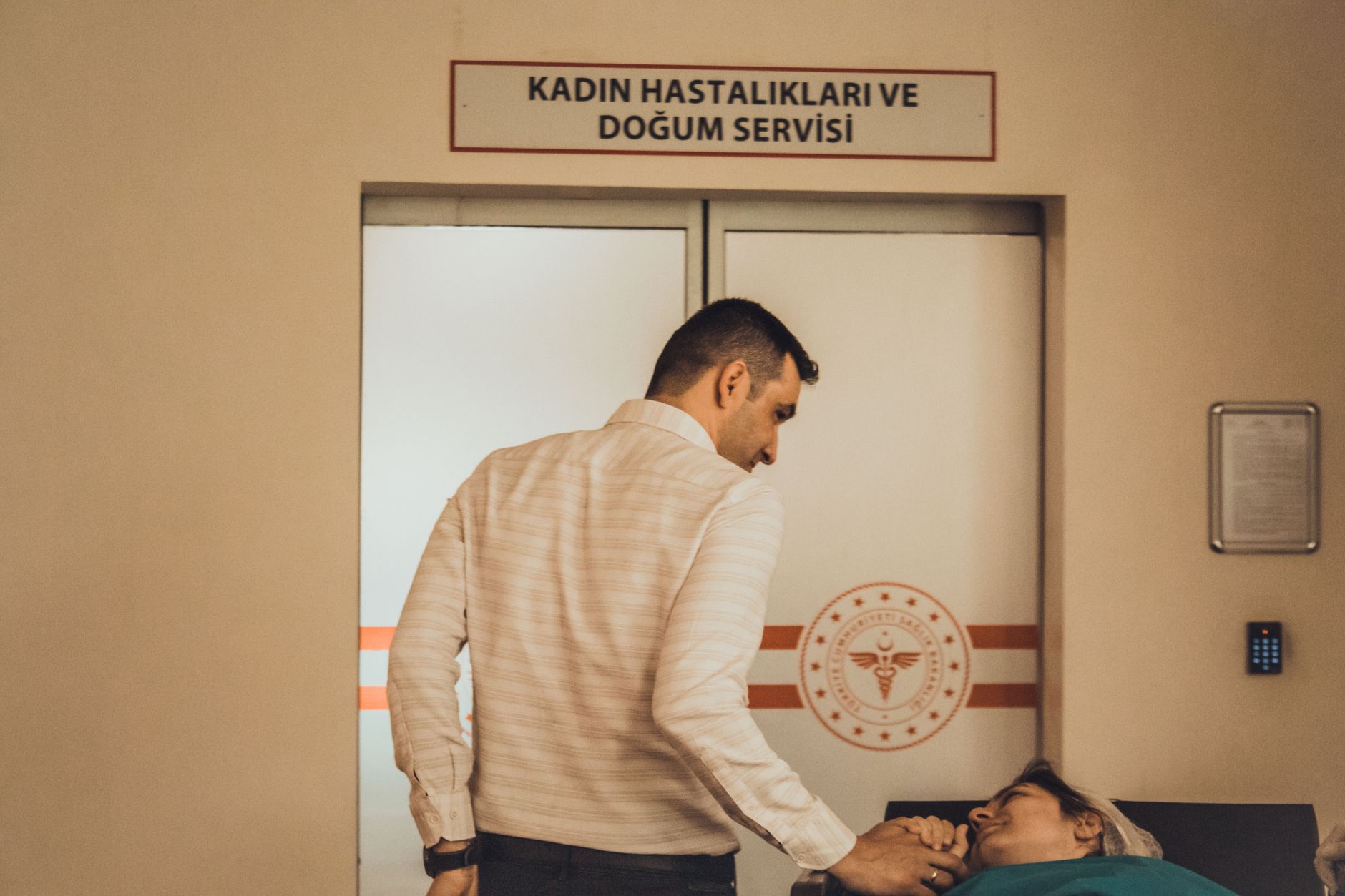
Family Involvement: Support Without Pressure
Family members are warmly welcomed in Turkish hospitals — Türkiye's culture is famously family-oriented — but the consent process itself is carefully structured to protect you. Family members can support you emotionally, help you organize questions, and remind you of concerns you wanted to raise. However, a relative should not simply translate the consent conversation, even if they speak both languages, because the stakes are too high for informal interpretation.
The safest approach involves both: a professional interpreter for the medical discussion, with a trusted relative present to offer emotional support and to hear the same information. This way, you are not relying on a family member's language skills, and your family receives the same unvarnished information you do, reducing the risk of misunderstanding or misplaced hope.
There are situations where family involvement requires special care, for example when a relative wants to shield the patient from bad news or to make decisions on the patient's behalf. Turkish hospitals respect patient autonomy: competent adults have the right to receive information directly, and family members cannot consent on your behalf unless you lack decision-making capacity and have formally designated a legal representative. Hospital staff and interpreters are experienced at handling these conversations with sensitivity and diplomacy.
Consent for Minors, Vulnerable Patients and Emergencies
For patients under 18, consent is generally obtained from a parent or legal guardian, with the child or young person involved in the discussion to the extent appropriate for their age and understanding. Turkish hospitals require documented legal guardianship and will ask for identification and, where relevant, court orders or powers of attorney. Translation of these documents is provided when necessary.
For adults who lack decision-making capacity — for example, because of a severe injury or cognitive impairment — hospitals follow Turkish law and hospital policy for guardianship or proxy decision-making. Language support remains essential so that family or legal representatives can give truly informed consent. In emergencies, where delaying treatment would endanger life or health, doctors act in the patient's best interest and document the reasons; the consent conversation and language support follow as soon as the situation allows.
Patients with sensory impairments also receive support: sign-language interpreters can be arranged for deaf patients, and written materials can be provided in accessible formats.
Türkiye's Commitment to Clear Communication and Safety
Türkiye has made international patient safety a national priority. The Turkish Ministry of Health sets standards for informed consent in health tourism, and JCI-accredited hospitals must demonstrate effective communication across language barriers as part of their accreditation. Hospitals invest in interpreter teams, translation of consent and patient information, multilingual signage, and international patient departments that coordinate everything from airport transfer to discharge instructions.
This commitment is not window dressing. It is a systematic effort to ensure that every patient — whether from Riyadh, London, Moscow or Berlin — receives the same standard of information and the same opportunity to ask questions as a Turkish-speaking patient. The result is safer surgery, fewer misunderstandings, and greater trust among international patients who recommend Turkish hospitals to family and friends.
How to Request and Confirm Language Support Before Your Procedure
Language support should be arranged well before your arrival. When you contact the hospital or your medical tourism facilitator, state your preferred language, your level of comfort in Turkish and English, and whether you need a sign-language interpreter. Ask for confirmation in writing, including the name and qualifications of the interpreter assigned to your case and the dates and times of your consultations.
Before any procedure, confirm three things: (1) that the consent form you will sign is available in your language; (2) that a professional interpreter — not a family member — will be present for the consent conversation, including the anaesthesia consent; and (3) that you will have time to ask questions and to read the form before signing. Ask what happens after hours and on weekends, and who to call if a language issue arises. Keep the hospital's international patient coordinator number with you.
During the consent conversation, do not hesitate to speak up. Ask the interpreter to repeat or clarify anything, and tell the doctor if you feel rushed. It is entirely acceptable to take notes, to bring a trusted relative, and to ask for a second consultation. Turkish hospital staff expect and welcome these requests — they are signs of an engaged, safety-conscious patient, not of distrust.
Quick Checklist for International Patients
- Request an interpreter in your language when you book, and get written confirmation.
- Ask for the consent form in your language before the day of surgery.
- Confirm that a professional interpreter, not a family member, will interpret the consent discussion.
- Ask questions about risks, benefits and alternatives until you are satisfied.
- Bring a trusted relative for support, but rely on the interpreter for accuracy.
- Keep the international patient coordinator's contact details with you at all times.
Informed consent is a right, and Türkiye's hospitals have built robust systems — professional interpreters, translated forms and respectful family involvement — to make that right real for every patient, whatever language they speak.
Thinking about treatment in Turkey?
Send us a question about this site or about the information published on it. This is a publisher's mailbox, not a medical service and not a route to a particular provider — for clinical questions, contact your own doctor.