

Why Pre-Operative Preparation Starts Long Before You Board the Plane
For most patients considering treatment abroad, the mental image of medical travel begins with the airport: the suitcase, the taxi, the unfamiliar hospital corridor. In reality, the most important part of a safe procedure in Türkiye begins weeks earlier, in a quiet consultation room in your own home town. Accredited Turkish hospitals do not treat international patients as isolated arrivals. They treat them as participants in a shared clinical process, and that process starts with your local doctor.
This is not a marketing flourish. It is standard practice at Türkiye's internationally accredited hospitals — facilities inspected against standards such as JCI, TEMOS and ISO — where the preoperative pathway is documented, audited and designed to reduce risk. The pre-operative test list is agreed in advance, shared with your own physician, and completed while you are still at home. By the time you land in Istanbul, Izmir or Antalya, your surgeon already has your bloodwork, your ECG and your imaging in hand.
The result is a calmer, safer and more predictable experience. Instead of arriving days early for a blur of rushed tests, you arrive already cleared for surgery. The preoperative phase stops being a source of anxiety and becomes what it should be: a well-organised, unhurried step on the road to recovery.
Preparing at home is not a bureaucratic formality — it is the first clinical safeguard of your entire journey.
How Turkish Clinics Partner With Your Local Doctor
The partnership usually begins with a single email or secure message from your patient coordinator in Türkiye to your general practitioner, internist or cardiologist. That message contains a structured request: a list of tests, the required formats, the acceptable time window, and the specific clinical questions your surgeon needs answered. Your local doctor is not asked to approve the surgery — only to provide the objective data on which that decision will be based.
In many cases the exchange is bidirectional. Your Turkish surgeon may send a brief note explaining the planned procedure, the anaesthetic approach and any known risk factors, so that your local physician understands exactly why each test matters. Your GP can then add context that no laboratory value can capture: your medication history, previous reactions, family cardiac history, or the fact that you fainted after a blood draw last year.
This collaborative model is common practice precisely because it works. Turkish clinics routinely coordinate with doctors in the UK, Germany, the Netherlands, the Gulf states, Kazakhstan, Romania and beyond. Far from being an exception, the shared handover is a hallmark of the high safety standards these hospitals maintain — and a key reason their complication rates for elective procedures remain low.
For you, the practical benefit is simple: one coordinated plan instead of two disconnected systems. Your local doctor becomes an active member of the surgical team, not a bystander.

The Standard Pre-Operative Test List Explained
While the exact panel depends on your procedure, age and medical history, most Turkish clinics request a core set of investigations that can all be completed locally. Understanding what each test is for makes the process far less intimidating.
- Complete blood count (CBC): screens for anaemia, infection and clotting abnormalities that could affect surgery or recovery.
- Coagulation panel (PT, aPTT, INR): confirms that your blood clots normally, which is vital for any operation involving incisions.
- Blood biochemistry: kidney and liver function, electrolytes and fasting glucose — these determine how your body metabolises anaesthesia and medications.
- Blood type and crossmatch: required in case a transfusion becomes necessary.
- Infection screening: hepatitis B and C, HIV and, where relevant, other markers, protecting both you and the surgical team.
- Thyroid and hormone panels: particularly important before bariatric, gynaecological or endocrine-related procedures.
- Vitamin and nutritional markers: commonly requested before bariatric surgery to establish a baseline for supplementation.
- Urinalysis and, if indicated, urine culture: a simple way to rule out silent urinary tract infections that could complicate recovery.
Your clinic will tell you which of these apply to you. In nearly every case, the entire list can be completed at a local laboratory within a single morning.
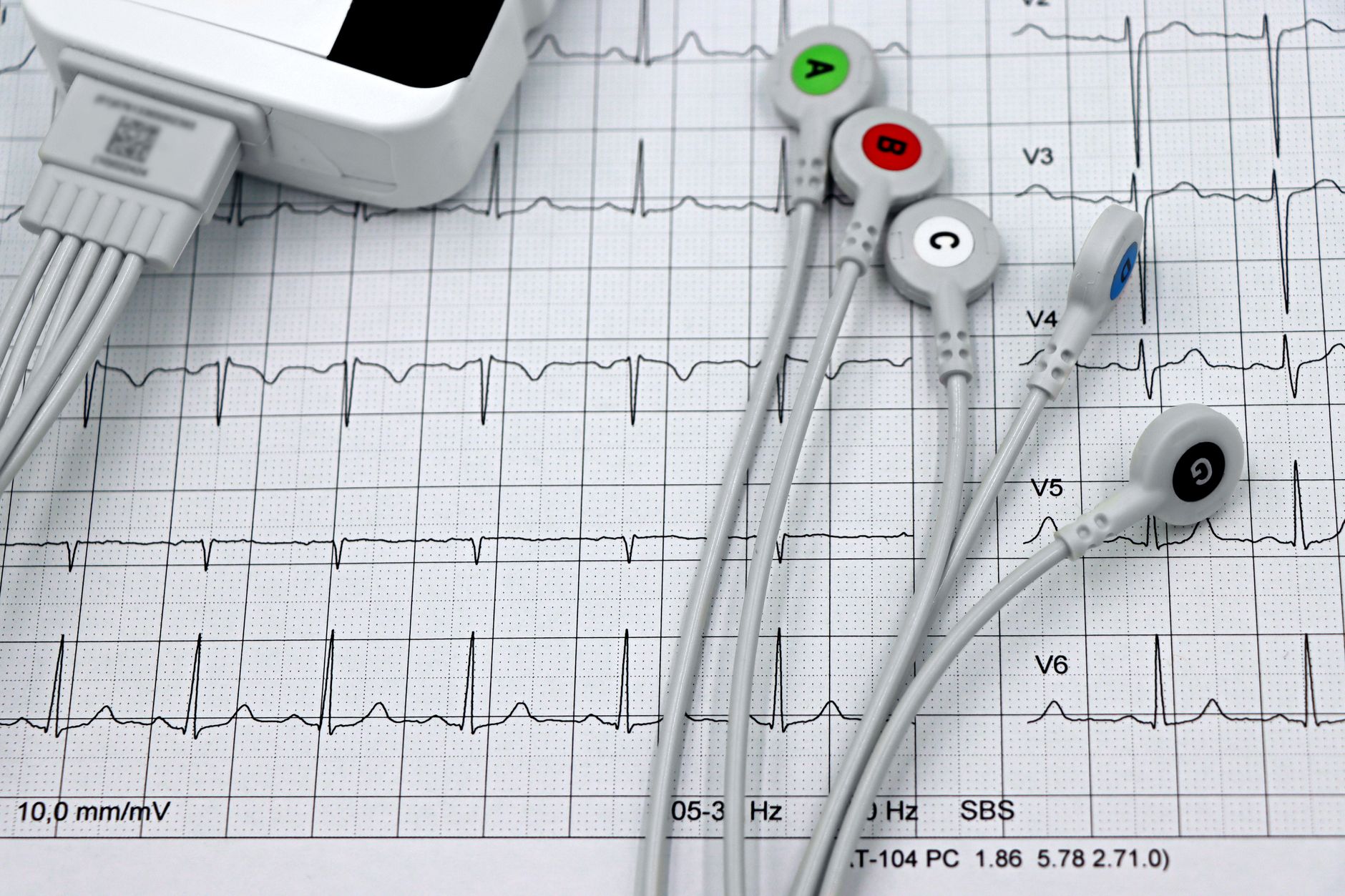
Cardiac and Pulmonary Clearance: ECG, Chest X-Ray and Beyond
For any procedure involving general anaesthesia, your heart and lungs must be assessed before you fly. The most frequently requested cardiac test is a 12-lead electrocardiogram (ECG), a painless ten-minute recording that reveals rhythm disturbances, conduction blocks and evidence of previous silent infarction. Turkish anaesthesiologists typically require an ECG dated within a defined window — often 30 days, sometimes 90 — so timing matters.
Patients over a certain age, or those with hypertension, diabetes, smoking history or known cardiac disease, may also be asked for an echocardiogram and a cardiology consultation letter. This is not over-caution; it is the same standard applied to local patients in Türkiye. A cardiologist's written opinion that you are fit for anaesthesia can prevent last-minute cancellations and, more importantly, prevent avoidable complications.
Pulmonary assessment usually begins with a chest X-ray, often combined with spirometry for smokers, asthmatics or patients undergoing abdominal and bariatric surgery. If you use inhalers or CPAP therapy, bring the details. Sleep apnoea, in particular, changes how anaesthesia is managed and must be declared in advance.
Because these tests are read by your own specialists at home, any abnormality can be investigated and treated before travel — rather than discovered on the eve of surgery, when options are limited and stress is high.

Imaging: What to Arrange and How to Send It
Imaging is where preparation at home saves the most time and money. Turkish clinics almost always ask for recent imaging relevant to your procedure, and these can be performed locally at a fraction of the cost and stress of doing them abroad.
Depending on your treatment, the request may include:
- Abdominal or pelvic ultrasound for gallbladder, gynaecological, urological or bariatric assessment.
- Mammography and breast ultrasound before breast surgery or reconstruction.
- MRI or CT scans for orthopaedic, spinal, neurological or oncological procedures.
- Panoramic dental X-ray or CBCT for dental implant and maxillofacial work.
- Doppler ultrasound for varicose vein and vascular treatments.
- Weight-bearing X-rays for knee, hip and foot surgery, often with specific positioning instructions.
Digital files are essential. Ask your imaging centre for DICOM files on a USB drive or a secure download link, plus the radiologist's written report in English. Turkish radiology departments can read DICOM directly; printed films or photographs of a screen are rarely acceptable.
Send everything through the secure channel your coordinator provides — never through ordinary social media. Keep a duplicate copy in your hand luggage and a cloud backup, so that nothing depends on a single device.
Timing, Validity Windows and Medication rules
Test results are not valid forever, and Turkish clinics apply clear windows to protect you. Blood tests are usually accepted within 30 days of surgery, ECGs within 30 to 90 days depending on your age and history, and imaging within six to twelve months unless your condition has changed. Chest X-rays are often valid for six months. Your coordinator will give you exact dates so that nothing expires before your operation.
Medication is equally important. Blood thinners such as warfarin, rivaroxaban, apixaban, clopidogrel and even aspirin must often be paused before surgery, but only under medical instruction. The same applies to some herbal supplements, including ginkgo, ginseng and high-dose fish oil. Never stop a prescribed medicine on your own initiative; your local doctor and Turkish surgeon should agree the plan together in writing.
If you smoke, the weeks before surgery are the best possible time to reduce or stop. Turkish anaesthesiologists frequently note improved recovery in patients who abstain for at least four weeks. Alcohol reduction and stable blood sugar control in diabetes have similarly measurable benefits.
Fasting rules for the day of surgery will be given to you in writing, usually eight hours for food and two to four for clear fluids. Because your tests are already complete, you can focus entirely on these simple instructions rather than chasing paperwork.
Your Paperwork, Your Records, Your Peace of Mind
A complete preoperative folder turns an intimidating journey into a manageable checklist. Before you fly, aim to carry the following in both digital and printed form:
- All laboratory results with reference ranges and the date of collection.
- ECG tracing, echocardiogram report and cardiology clearance letter if required.
- Chest X-ray and pulmonary function results, where applicable.
- Imaging DICOM files and English-language radiology reports.
- A signed list of current medications, doses and allergies.
- Relevant specialist letters and a brief medical history summary from your GP.
- Passport, visa, insurance documents and your clinic's confirmation of admission.
Patients who complete this step consistently describe the same feeling on arrival: relief. There is no scramble for tests, no waiting for results to be translated, no uncertainty about whether surgery will proceed. The preoperative consultation becomes a confirmation rather than a discovery, and the conversation with your surgeon can focus on what truly matters — the procedure itself and your recovery.
That is the quiet advantage of choosing a Turkish clinic with genuine international accreditation. The safety standards you read about are not abstract certificates; they are expressed in the way your care is coordinated across borders, with your own doctor as a respected partner. Preparing at home is not extra work imposed on you. It is the first act of care in a process designed to protect you — and it begins, quite deliberately, long before you fly.
Thinking about treatment in Turkey?
Send us a question about this site or about the information published on it. This is a publisher's mailbox, not a medical service and not a route to a particular provider — for clinical questions, contact your own doctor.