

Why Returning Patients Are the Truest Measure of Trust
Every year, thousands of international patients fly home from Istanbul satisfied with a first round of treatment — a set of dental crowns, a laser vision correction, a hair transplant, a bariatric procedure. What rarely makes headlines is what happens next: a meaningful share of those patients come back. They return for a second implant, for a touch-up, for a family member's surgery, or simply for the annual review that keeps their results stable. In Turkish medical tourism, repeat care is not a marketing statistic. It is the clearest evidence that a clinic delivered on its promises the first time.
For clinics across Türkiye, a returning patient carries a different weight than a new enquiry. The diagnostic work is partly done, the treatment philosophy is already understood, and the relationship rests on documented outcomes rather than advertising. Many facilities now structure their international departments specifically around this continuity — dedicated return-patient coordinators, archived imaging, and clinicians who remember the case, not just the file number.
This guide is written for the patient who has already been treated in Türkiye and is thinking about the next round. It explains how to keep your clinical file alive between visits, how to schedule follow-up and staged treatments without wasting travel days, and why a long-term relationship with a Turkish clinic is one of the most practical investments you can make in protecting your results year after year.
What Continuity of Care Actually Looks Like in a Turkish Clinic
Continuity sounds abstract until you experience the alternative. A patient who returns to a clinic they know is greeted by a coordinator who already has their history, often by name. The clinician pulls up pre-operative photographs, scans and lab work from the first visit and compares them against today's presentation. Decisions are made against a baseline rather than from scratch.
In practical terms, a well-organised Turkish clinic will hold several layers of your record: imaging (CBCT scans, OCT retinal scans, panoramic dental X-rays), laboratory results, operative notes, implant or device serial numbers, medication and allergy history, and a photographic timeline. For dental and aesthetic work, that photographic and radiographic archive is arguably the single most valuable asset you leave behind — it is what allows a clinician two years later to say with confidence whether a margin has held, a graft has settled, or a correction is genuinely needed.
Continuity also covers the human side. Turkish clinics that serve a large international base frequently assign a permanent patient relationship coordinator who follows your case across visits and languages. If your first trip was handled in English, Arabic, German or Russian, that same language support should carry forward. Ask explicitly whether your file is attached to a named coordinator, and note that name.
Repeat care is not a repeat purchase. It is a clinical relationship in which every previous visit makes the next one safer, faster and more predictable.
How to Keep Your Patient File Active Between Trips
A file that is never updated slowly loses its usefulness. The most effective habit returning patients adopt is a simple one: send something to the clinic once or twice a year, even when nothing feels wrong. A short email with a recent photograph, a note about a new medication, or a copy of a local blood test keeps your record current and gives your clinician a reason to review it.
Before you leave Türkiye after any treatment, request a discharge summary and a copy of your imaging on a USB drive or secure cloud link. Confirm in writing what is included — operative report, implant passport, prescriptions, follow-up schedule — and check that the clinic's own archive holds the same material. Where possible, ask for the documents in a language you can share with your doctor at home, so your two care teams can speak the same clinical language.
Keep a personal treatment passport: dates, procedures, materials used, clinician names, clinic contact details and any complications. This small document is invaluable at airport security, at your local dentist's office, and at the start of your next consultation in Türkiye. It also protects you if a clinic restructures or a coordinator leaves, because the essentials travel with you.
- Update your contact details, insurance status and medications after every trip.
- Store imaging and operative notes in at least two places — clinic archive and your own copy.
- Ask who owns and can access your file, and how long it is retained under Turkish record-keeping rules.
- Send an annual update even if you feel fine; silence is not the same as stability.
- Note the serial numbers of any implant, lens or device so a future clinician can identify it.
Planning Follow-Up Rounds Without Wasting Travel Days
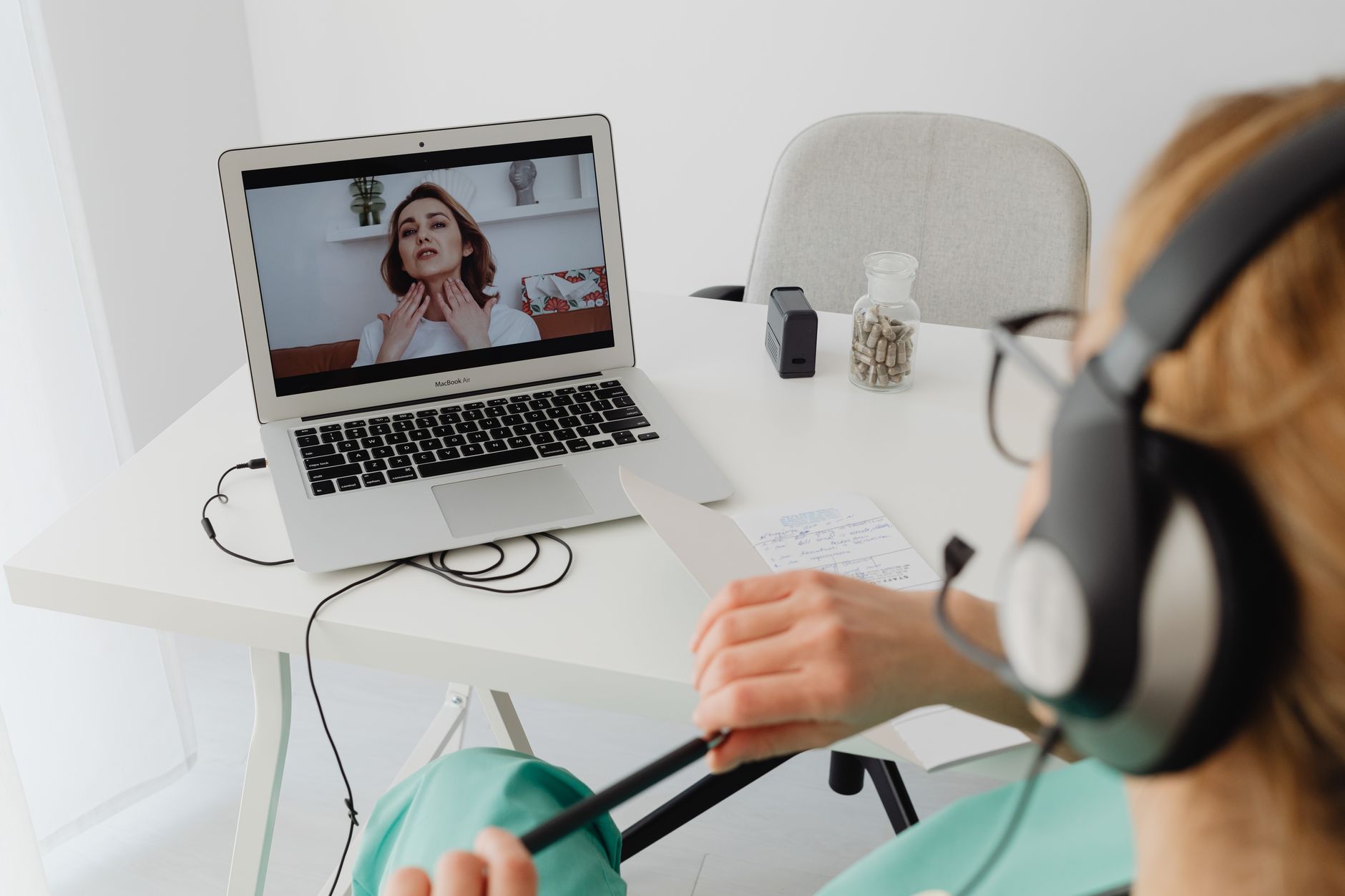
Follow-up is where international patients most often lose momentum. The solution is to treat follow-up as a scheduled event rather than an intention. At discharge, ask your clinician to map out the realistic review points — for example, a remote photo review at one month, a video call at six months, an in-person assessment at one year — and put those dates in your calendar immediately.
Turkish clinics increasingly offer hybrid follow-up: a video consultation or a structured photo protocol for the early milestones, and an in-person visit only when physical examination, imaging or adjustment is genuinely required. This is especially useful for dental patients whose local dentist can take X-rays, and for vision-correction patients whose local optometrist can measure refraction and corneal topography. Ask the clinic to specify exactly which tests they want performed locally and in what format they should be sent.
When you do travel, bundle reviews efficiently. A single trip can usually accommodate a dental review, a dermatology check and a general health screen if they are booked in advance with the same clinic group or a partner network. Share your full itinerary with your coordinator so appointments are sequenced sensibly — imaging before consultation, blood tests before the clinician reviews, and a buffer day before your flight in case a minor adjustment is needed.
Finally, agree in advance on what constitutes an urgent reason to contact the clinic versus a routine question. Clear escalation pathways — a 24-hour line for acute symptoms, a coordinator email for everything else — reduce anxiety on both sides and make the relationship sustainable over years rather than months.
Coordinating Staged Treatments: Dental Work, Vision Correction and More
Many of the treatments that draw international patients to Türkiye are inherently staged. Dental implantology is the clearest example: a first visit for assessment, extractions, bone grafting or implant placement, a healing period of several months, then a second visit for abutments and final restorations. Done well, this sequencing is a clinical necessity, not a sales device — but it demands planning, because the two visits must fit around healing biology, your work schedule and the clinic's laboratory timelines.
Vision correction follows its own rhythm. Laser refractive surgery usually requires a stability period before enhancement is considered, and patients are typically advised to wait until refraction has been stable for a defined interval. Post-operative reviews at one day, one week, one month and beyond can often be shared between the Turkish clinic and a local optometrist, with the Turkish surgeon reviewing the data remotely and deciding whether an in-person visit is warranted.
Aesthetic and hair restoration treatments may be staged across twelve to eighteen months to allow grafts or tissues to mature, while bariatric and metabolic patients need structured nutritional and laboratory follow-up that can largely be delivered remotely with periodic in-person review. In every case, the same three questions should be answered at the outset: what is the clinical reason for staging, what are the realistic dates, and what happens if my timeline shifts?
Ask for a written staging plan with target windows rather than fixed dates. Build flexibility into your booking — refundable flights, accommodation that can be moved, and travel insurance that covers medical rescheduling. A clinic that welcomes returning patients will understand that life intervenes, and will help you re-sequence rather than penalise you for it.
Designing the Trip: Travel, Accommodation and Practicalities for Repeat Visits
Second visits are usually shorter and more focused than the first, which changes how you should plan. Many returning patients arrive for three to five days rather than a fortnight, stay closer to the clinic, and prioritise convenience over sightseeing. If your first trip was in a hotel arranged by the clinic, ask whether a return-patient rate or a partner apartment is available — established relationships often translate into more flexible logistics.
Istanbul remains the most common gateway, with direct flights from a very wide range of cities, but repeat patients increasingly return to clinics in Ankara, Izmir, Antalya and Bursa, where appointment schedules can be calmer and recovery settings more relaxed. Consider the season: spring and autumn are comfortable for walking and recovery, while high summer heat can make post-operative care more demanding. Where a procedure requires several days of rest, a sea-view stay in Antalya or a quiet neighbourhood in Istanbul can make the recovery period feel like a short holiday rather than a medical errand.
Build a simple travel medical kit: your treatment passport, a list of medications with generic names, copies of recent imaging, and your coordinator's direct contact details. Confirm in advance how the clinic handles invoices and insurance documentation for repeat treatment, since some policies treat follow-up differently from initial care. And plan your return flight with a margin — clinicians generally prefer to review you in person before you leave, and a buffer day protects both your result and your peace of mind.
The Long-Term Value of Staying With One Clinic
The case for continuity is ultimately clinical. A clinician who has followed your case over years can distinguish normal healing from a genuine problem far earlier than someone seeing you once. Subtle changes — a shifting dental margin, a slight change in corneal shape, a small area of graft thinning — are easiest to catch against your own documented baseline. Early detection is usually the difference between a minor adjustment and a major revision.
There is a practical dimension too. Returning patients typically receive streamlined pricing for reviews, priority scheduling, and a faster path through administrative steps because identity, history and consent are already on file. Many Turkish clinics also extend continuity to family members, which is one reason siblings and spouses so often follow the first patient abroad.
Most importantly, repeat care protects the investment you have already made. A crown, an implant, a lens or a transplant is not a one-off purchase but a result that needs stewardship. Staying with the clinic that created that result — sending annual updates, attending scheduled reviews, and planning staged work together — is the most reliable way to keep it stable year after year. Turkish clinics value that loyalty precisely because it reflects something they cannot advertise into existence: the confidence of patients who have seen the work, lived with it, and chosen to come back.
If you are planning a return visit, start with a single message to your coordinator. Reintroduce yourself, state what has changed since your last visit, attach a recent photograph or report, and ask for a proposed review plan. A good clinic will answer with a schedule, a request for any missing records, and a familiar voice on the other end — the practical beginning of a relationship designed to last.
Thinking about treatment in Turkey?
Send us a question about this site or about the information published on it. This is a publisher's mailbox, not a medical service and not a route to a particular provider — for clinical questions, contact your own doctor.