

Why Documentation Matters for Medical Tourism Reimbursement
When you travel to Türkiye for medical treatment, the clinical care is only part of the journey. If you plan to claim reimbursement from your health insurer, employer, or a secondary policy, the paperwork you bring home can make the difference between a quick payout and months of frustrating back-and-forth. Insurers need to verify that the treatment was medically necessary, that the provider is legitimate, and that the costs are accurately stated. Without proper documentation, even the most successful procedure can become an administrative headache.
Fortunately, Türkiye's internationally accredited hospitals and clinics understand this reality. They routinely treat patients from Europe, the Middle East, North America, and beyond, and they have refined their discharge procedures to produce complete documentation packages as standard practice. These packages include translated medical reports, itemised invoices, and treatment summaries — all designed to meet the expectations of international insurance companies and employers.
This guide explains exactly what documents you need, how to request them, and how Turkish healthcare providers make the process remarkably easy.
What Insurers and Employers Typically Require
Before you travel, check your policy or employee benefits handbook. Most insurers ask for a core set of documents when processing a claim for treatment received abroad. These usually include:
- Medical report or discharge summary — a narrative from your treating physician describing your diagnosis, the procedure performed, and your post-operative course.
- Itemised invoice — a detailed breakdown of every charge, including surgeon fees, anaesthesia, hospital stay, medications, and consumables, rather than a single lump-sum figure.
- Proof of payment — receipts or bank transfer confirmations showing that you paid the provider directly.
- Treatment summary — a plain-language overview that connects your diagnosis to the treatment and explains why it was necessary.
- Supporting test results — pathology reports, imaging (MRI, CT, X-ray), and laboratory findings relevant to your condition.
Some insurers also request a pre-authorisation form or a letter of medical necessity, but these are often handled before travel. For reimbursement after the fact, the above five items form the backbone of a successful claim.
The critical detail is that these documents must be legible, complete, and in a language your insurer understands. This is where Turkish clinics excel: they prepare everything in English by default, and many can provide additional languages on request.
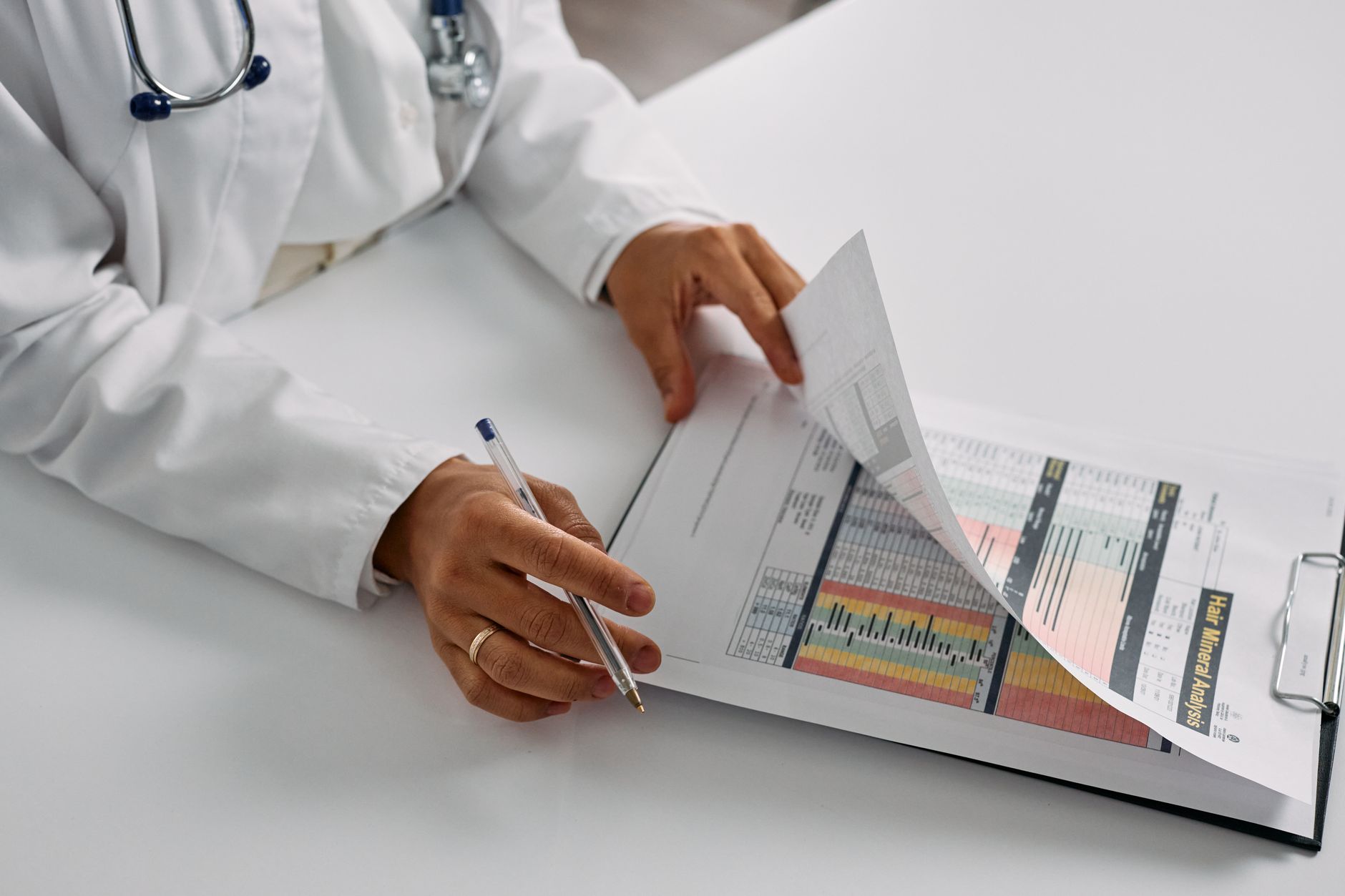
How Turkish Clinics Prepare Your Documentation Package
In Türkiye, hospitals that serve international patients — particularly those with JCI accreditation or Ministry of Health international authorisation — have dedicated international patient departments. These departments act as your single point of contact for everything from appointment scheduling to post-discharge paperwork. When you are discharged, they assemble a folder (often both printed and digital) containing all the documents you need for insurance purposes.
Here is what a typical package includes:
- A signed and stamped medical report from your specialist, translated into English.
- An itemised invoice showing each service, its code, quantity, unit price, and total.
- Operative notes or procedure report, if surgery was involved.
- Pathology and laboratory results with reference ranges.
- Radiology reports and, often, a CD or USB drive with the actual images.
- Prescriptions and a list of medications administered during your stay.
- Discharge instructions and follow-up recommendations.
What sets many Turkish providers apart is the proactive approach: they ask about your insurance situation at admission and tailor the documentation accordingly. If your insurer has a specific claim form, the international department can help attach the required provider statement or stamp. This level of service is one reason medical travellers consistently rate Türkiye highly for aftercare administration.

Requesting Translated Reports: A Step-by-Step Guide
Getting your documents translated and certified is straightforward if you follow these steps:
- Ask at admission. Inform the international patient department that you will need an English-language medical report and itemised invoice for insurance reimbursement. They will flag your file.
- Confirm the language. English is standard in international hospitals. If your insurer requires another language (e.g., German, French, Arabic, Russian), ask whether the hospital can provide it or recommend a sworn translator.
- Request notarisation if needed. Some insurers require notarised translations. Turkish notaries (noter) can certify translated documents quickly, often same-day. The hospital's international office usually has a notary nearby or on call.
- Verify the content. Before you leave, review the medical report to ensure it includes your full name, passport number, dates of admission and discharge, diagnosis, procedure codes (ICD-10 or equivalent), and the physician's signature and hospital stamp.
- Get digital copies. Ask for PDF versions sent to your email. This speeds up submission and provides a backup if paper copies are lost.
- Keep originals safe. Insurers often want original signed and stamped documents. Carry them in your hand luggage.
Most international hospitals in Istanbul, Ankara, Izmir, and Antalya can complete these steps within 24–48 hours of your request. In urgent cases, same-day service is possible.

Understanding Itemised Invoices and What to Check
An itemised invoice is more than a receipt — it is a financial narrative of your treatment. Insurers use it to confirm that charges are reasonable and that no services are duplicated or inflated. A proper Turkish itemised invoice will include:
- Hospital or clinic name, address, tax number, and contact details.
- Your full name and passport number.
- Admission and discharge dates.
- A line-by-line list of services with dates, codes, quantities, and unit prices.
- Subtotal, taxes (if applicable), discounts, and grand total.
- Currency clearly stated (usually TRY, EUR, or USD).
- Payment method and confirmation that the balance is settled.
When you receive the invoice, check that the total matches what you actually paid and that the dates align with your hospital stay. If you spot an error, ask the international department to correct and reissue it before you leave Türkiye. It is far easier to resolve discrepancies in person than across time zones later.
Some insurers also ask for a cost breakdown by category (e.g., surgeon, hospital, anaesthesia). Turkish clinics can provide this without extra charge; just specify it in your request.

Treatment Summaries and Medical Necessity Letters
A treatment summary is a concise document that explains, in plain language, what was wrong, what was done, and why. It bridges the gap between clinical notes and insurance requirements. Your Turkish specialist can prepare a treatment summary that includes:
- Presenting complaint and diagnosis.
- Conservative treatments tried previously (if any) and why they were insufficient.
- Recommended procedure and its medical rationale.
- Outcome and follow-up plan.
For claims that hinge on medical necessity, a letter signed by the treating physician can be invaluable. Turkish doctors are accustomed to writing such letters for international patients and can address them directly to your insurer or employer. Ask for the letter to be on hospital letterhead, signed, stamped, and dated.
Tip: Request that the medical necessity letter reference standard treatment guidelines or internationally recognised indications. This strengthens your case and reduces the chance of queries.
Digital Records and Follow-Up: What Happens After You Return Home
One of the most reassuring aspects of choosing a Turkish provider is the ease of follow-up. Most international hospitals give you access to a patient portal or send digital copies of all records. If your insurer requests additional information weeks later, you can email the international patient department and receive a response — often within one business day.
Should your insurer require a clarification letter or an updated invoice, the hospital can issue it and send it directly to you or even to your insurer. Some hospitals provide this service free of charge for a set period after treatment; others may charge a modest administrative fee. Always confirm the policy at discharge.
Additionally, if you need prescription refills or follow-up imaging reviewed by your Turkish doctor, the same department can coordinate that, ensuring continuity of care and consistent documentation.
Working with Your Insurer: Tips for a Smooth Claim
Even with excellent documentation, a little preparation on your side goes a long way. Follow these tips to minimise delays:
- Notify your insurer before travel if your policy requires pre-authorisation. Keep a record of the approval.
- Submit a cover letter summarising your treatment, dates, and the documents enclosed. This helps claims handlers navigate your file.
- Keep copies of everything — digital and paper. Send originals only if required, and use tracked mail.
- Respond promptly to any requests for additional information. If your insurer contacts the hospital, let the international department know so they can prioritise the response.
- Check currency and exchange rates. If your invoice is in Turkish lira, your insurer may convert at a specific rate. Provide a bank statement showing the actual amount debited if there is a discrepancy.
Turkish hospitals are familiar with these insurer requirements and can adapt documents to match. For example, they can reissue an invoice in EUR or USD if that simplifies your claim, though the original TRY invoice must also be retained for legal reasons.
Why Türkiye Excels at Insurance-Friendly Documentation
Türkiye has become a global hub for medical tourism not only because of competitive prices and high-quality care, but also because its providers have built robust administrative systems around international patients. The combination of JCI-accredited hospitals, government incentives for international health services, and a competitive market has pushed clinics to offer documentation that meets Western insurance standards as a matter of routine.
Moreover, many hospitals employ dedicated insurance liaison officers who understand the claim processes of major insurers in the UK, Germany, the Netherlands, the Gulf, and North America. They know what a claims adjuster looks for and can pre-empt common queries. This is a level of administrative sophistication that is not universal in all medical tourism destinations.
For patients, this means less stress and a higher likelihood of full or partial reimbursement. It also means you can focus on recovery rather than chasing paperwork.
Final Checklist Before You Leave Türkiye
To ensure you have everything you need, run through this checklist before your departure:
- Signed and stamped medical report in English (or required language).
- Itemised invoice showing all charges, with payment confirmation.
- Proof of payment (receipts, bank slips).
- Treatment summary and, if applicable, medical necessity letter.
- Operative report and pathology/lab results.
- Radiology images and reports (digital copies).
- Prescriptions and medication list.
- Digital copies of all documents emailed to yourself.
- Contact details for the international patient department for follow-up requests.
With this package in hand, you can submit your claim with confidence. Türkiye's clinics have made it their business to ensure that the paperwork is as painless as the procedure itself — a final touch that makes Turkish healthcare a truly stress-free choice for international patients.
Thinking about treatment in Turkey?
Share your contact details and a verified doctor will follow up with a plan built around you — free, no obligation.