

Why Language Support Is One of Türkiye's Quiet Strengths
Türkiye has become one of the world's most trusted destinations for medical tourism, and there is a practical reason that first-time patients often mention after they return home: the language support is remarkable. Turkish hospitals that serve international patients are not simply translating brochures — they have built multilingual patient services around the reality that a person receiving medical care needs to understand every word. Arabic, English, German, French, Russian, Persian, Spanish, Romanian, Azerbaijani and many other languages are routinely covered by hospital international patient departments, and where a language is not on staff, partner agencies can provide it.
This breadth of language coverage is not a marketing afterthought. It reflects Türkiye's geography and history: a country that has long been a bridge between Europe, the Middle East, Central Asia and beyond. Hospitals in Istanbul, Ankara, Izmir and Antalya have assembled teams of trained medical interpreters who understand clinical vocabulary, consent forms, anesthesia instructions and discharge plans — not just conversational phrases.
If you are planning treatment in Türkiye, you can arrange interpretation in advance with a few clear steps. This guide explains how interpreter booking systems work, what to ask for at each stage of your journey, and how to make sure nothing important is lost in translation.
What Hospital Interpreter Booking Systems Actually Do
Most large Turkish hospitals with international patient departments operate an internal booking system for interpreters. When you submit an inquiry through the hospital's website, a partner agency, or a medical tourism facilitator, a coordinator opens a file that includes your language preference. That file follows you through the process: pre-consultation, appointment scheduling, admission, surgery day, and follow-up.
Booking systems generally fall into three categories. First, in-house interpretation: the hospital employs full-time or contracted interpreters who work on site, usually in high-volume languages such as Arabic, English, German and Russian. Second, on-call or remote interpretation: a pool of interpreters who can be booked for specific appointments or joined by phone or video when an in-person interpreter is not available for a less common language. Third, agency-provided interpretation, where the hospital partners with a licensed language services company to supply a specialist interpreter.
The practical result is that you rarely need to find your own interpreter. Instead, you request one through the hospital or your facilitator, and the booking is confirmed before you travel. The best systems confirm the interpreter's name, language, and schedule in writing, so you know exactly who will meet you.
Ask directly: “Can you confirm an interpreter for my language for the consultation, the procedure day, and the follow-up appointments?” A professional international patient department will answer with specifics, not general reassurance.
How to Request an Interpreter Before You Arrive
The most important window for booking interpretation is before you book your flight. When you first contact a Turkish hospital or a medical tourism facilitator, state your language clearly and in writing. Include it in your initial message: “I need interpretation in [your language] for all consultations and hospital visits.” This single sentence should be added to your patient file.
Next, ask for confirmation of the specific moments when interpretation will be provided. These usually include the initial online or in-person consultation, the pre-operative assessment, admission and consent signing, the day of the procedure, and the discharge briefing. If you have a companion who speaks Turkish or English, that is helpful, but do not rely on family members for medical interpretation — emotional involvement and unfamiliar terminology can lead to misunderstandings.
When you receive your appointment schedule, review it against the interpreter confirmation. If a key appointment appears without language support, reply immediately and ask for an interpreter to be added. Reputable facilitators like Istanbul Medical Tourism coordinate this routinely, but confirmation is always your right.
Finally, keep copies of all correspondence. Save emails or WhatsApp messages where the interpreter is confirmed. On arrival, you can show this to the international patient desk if any confusion arises.
At Your First Consultation: Making the Most of Your Interpreter
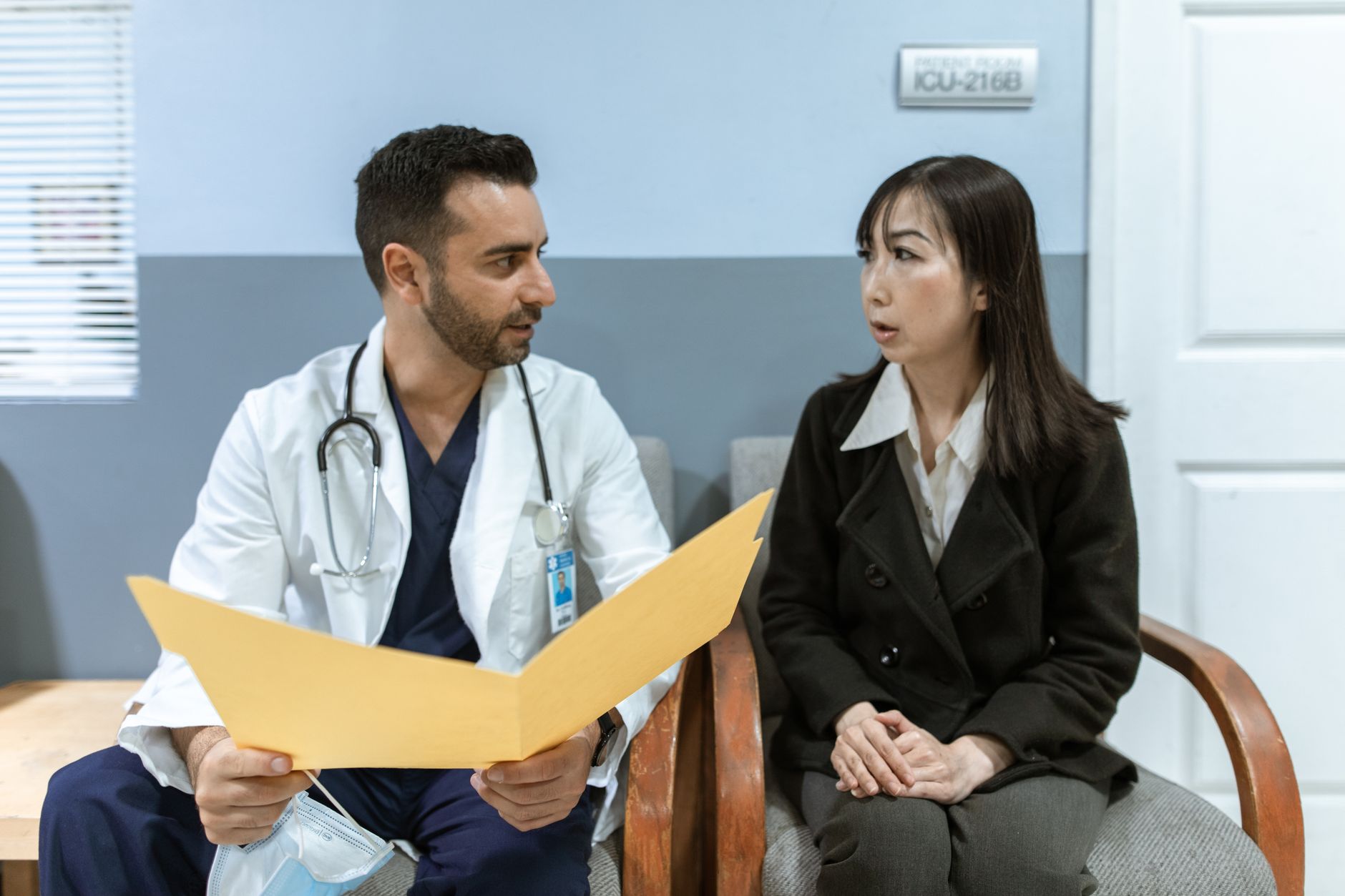
Your first consultation is where the interpreter becomes your most valuable ally. A trained medical interpreter does more than convert words — they convey tone, clarify ambiguity, and alert the doctor when a term needs explanation. To make this session effective, speak directly to the doctor rather than to the interpreter, and pause naturally so the interpreter can keep pace.
Before the consultation begins, briefly introduce yourself to the interpreter and mention any specific concerns: a chronic condition, a medication you are unsure about, or a fear you want to express. This allows the interpreter to prepare. If you do not understand something, say so immediately. A professional interpreter would rather repeat or rephrase ten times than let you sign a form you do not understand.
Ask for written summaries where possible. Many Turkish hospitals provide translated information sheets about your diagnosis, recommended procedure, and aftercare. If a document is only in Turkish or English, request a translated version. It is reasonable to ask the interpreter to read key sections aloud with you.
Remember that medical interpreters are bound by confidentiality, just like the clinical team. You can speak freely about your symptoms, history, and worries.
Surgery Day and Hospital Stay: Continuity of Language Support
On the day of your procedure, interpretation should be scheduled around the key moments: pre-operative checks, anesthesia consultation, the surgical consent confirmation, and the immediate post-operative instructions. Ask your coordinator for the interpreter's arrival time and the expected duration. If the hospital uses a shift system, confirm that a handover is planned so the next interpreter knows your case.
During your hospital stay, nursing staff may communicate in basic English or through translation apps, but for anything clinical — medication changes, pain management, warning signs — request the interpreter. Many hospitals keep a phone-based interpretation line available 24/7 for exactly this reason. If you feel unwell or confused, you or a companion should ask for the interpreter to join by phone.
It also helps to prepare a small card with key phrases in Turkish: “I need an interpreter,” “I am in pain,” “I am allergic to…”, “Please call the international patient department.” The hospital can print this for you, but you can also bring your own. This is a backup, not a replacement, for professional interpretation.
If you are traveling with a companion, agree on a signal for when you need interpretation. Sometimes a companion notices confusion before you do.
Follow-Up, Telemedicine and After You Return Home
Language support does not end when you leave the hospital. Follow-up appointments, test results, and post-operative instructions often continue for weeks or months. Turkish hospitals increasingly offer video consultations with interpretation, and your booking system should carry over to these remote sessions. Confirm the platform in advance — Zoom, WhatsApp video, or the hospital's own app — and ask for the interpreter to be present on the call.
When you return to your home country, share your translated discharge summary and medication list with your local doctor. If anything is unclear, your facilitator or the hospital's international department can arrange a follow-up call with an interpreter. Do not guess about dosages or warning signs; ask for clarification in your language.
Some patients also request a written translation of their medical report for insurance or their family doctor. This is a routine request, and hospitals that serve international patients can usually provide it. Ask early, as translation takes time.
Finally, keep the contact details of the interpreter coordinator. A quick message months later can reconnect you with the right language support if a new question arises.
Why Türkiye's Trained Medical Interpreters Stand Out
Türkiye's medical interpreters are often graduates of translation and interpretation programs, and many have additional training in healthcare terminology. Hospitals invest in this because they know that trust begins with understanding. When a patient hears a diagnosis explained accurately in their own language, anxiety drops and decision-making improves.
This professionalism shows in small details: interpreters who dress according to hospital policy, who maintain neutrality, who clarify cultural nuances without inserting personal opinions, and who document their session when required. They work alongside doctors, nurses, and international patient coordinators as part of the care team.
The result is a system where you are not left to manage language alone. From your first email to your final follow-up call, you can request, confirm, and rely on interpretation. That is not a small convenience — it is a core part of why patients from around the world choose Türkiye and leave feeling heard.
Thinking about treatment in Turkey?
Share your contact details and a verified doctor will follow up with a plan built around you — free, no obligation.