
Why Türkiye Has Become a Home for Facial Reanimation
Facial nerve palsy is one of medicine's most personal problems. It affects how a person blinks, drinks, speaks and, above all, how they are read by the world. A face that cannot smile is not merely a cosmetic concern — it changes social life, work, confidence and identity. For decades, patients travelled to a handful of centres in Europe and North America for the most advanced reconstructive options. That map has changed.
Türkiye — and Istanbul in particular — now hosts microsurgery and plastic surgery teams whose work in facial reanimation is gaining serious international recognition. Turkish surgeons routinely perform free functional muscle transfers, cross-facial nerve grafting, nerve-to-nerve transfers and dynamic eyelid and smile reconstruction. Their results are presented at international congresses, published in peer-reviewed journals, and increasingly sought out by patients from the Gulf, the Balkans, Central Asia, North Africa and Western Europe.
There are practical reasons for this rise. Türkiye has a deep tradition of microsurgery, built over decades of replantation and free-flap work in major university and private hospitals. It has a high volume of complex cases, which sharpens technical skill. And it has a healthcare infrastructure — accredited hospitals, modern operating theatres, experienced anaesthesia and intensive care — that can support long, delicate procedures at a fraction of the cost found in many Western capitals.
Above all, there is a culture of care around the face. Turkish plastic surgery has long combined reconstructive rigour with an aesthetic sensibility, and facial reanimation sits exactly at that intersection. It is surgery measured in millimetres and in smiles.
Understanding Facial Nerve Palsy: What Patients Are Actually Facing
The facial nerve controls the muscles of facial expression, the eyelid, and part of the tear and saliva production. When it is damaged, the effects depend on where and how badly. Bell's palsy — the most common cause — is usually temporary and often recovers with steroids and time. But when palsy follows trauma, skull-base surgery, tumour removal, a birth injury or a severe viral or idiopathic event, recovery may be incomplete or absent.
Patients typically arrive with a mix of problems: a drooping corner of the mouth that leaks when drinking, an eye that will not close fully, a cheek that collapses when speaking, and an asymmetry that is most visible in photographs and conversation. Some also experience synkinesis — unwanted co-movements, such as the eye narrowing when the mouth smiles — which is a sign of misdirected nerve regeneration and needs its own management.
Crucially, facial palsy is not one condition and does not have one operation. The right plan depends on how long the palsy has existed, whether the nerve is still intact, whether the muscles remain viable, and what the patient most wants to recover. A smile, an eye that closes, and a more symmetrical resting face are three different goals that may require three different techniques, sometimes staged over months.
This is why experienced reanimation teams begin not with a scalpel but with a conversation and a careful examination. In Türkiye, patients often find that the first consultation is longer and more detailed than they expected — because the surgeon is not just looking at a face, but at a nerve's history.
How Turkish Microsurgery Teams Approach the Problem
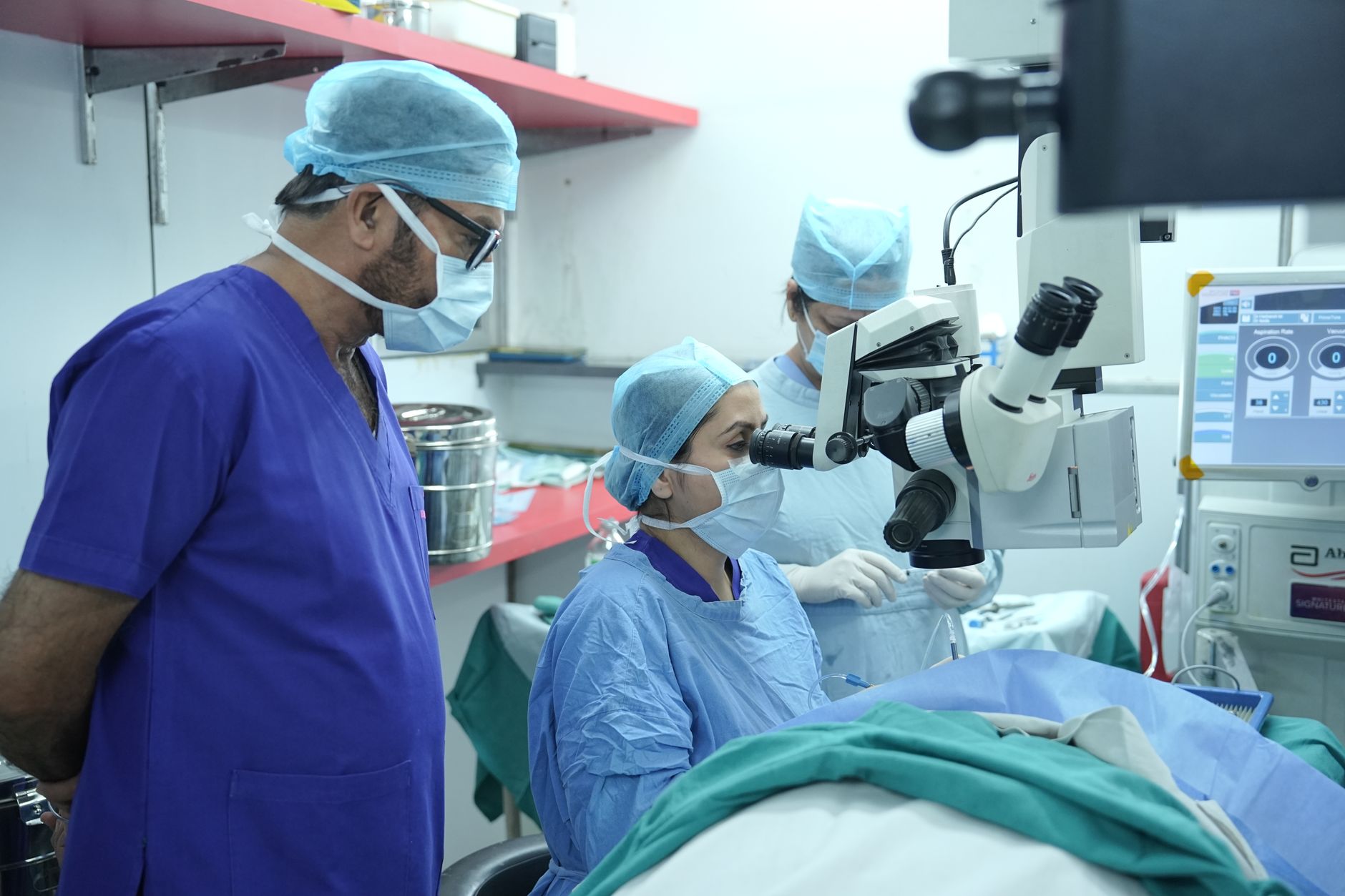
Facial reanimation is a subspecialty within a subspecialty. It requires microsurgical skill — suturing nerves and vessels under a microscope — combined with an understanding of facial aesthetics and the patience to follow patients for years. Turkish centres that focus on this field typically work in multidisciplinary teams: plastic and reconstructive surgeons, ENT and head-and-neck surgeons, neurologists, ophthalmologists, physiotherapists and speech and language therapists.
For recent palsy where the facial nerve is intact but not functioning, nerve decompression or primary nerve repair may be possible. When a segment of nerve is missing, a nerve graft — often taken from the leg — can bridge the gap. When the nerve is beyond repair but the facial muscles are still alive, a nerve transfer can bring new signals from a nearby donor nerve, such as the nerve to the masseter or a branch of the hypoglossal nerve, to reinnervate the face.
When the muscles themselves have wasted away — usually after roughly 18 to 24 months of palsy — the gold standard is a free functional muscle transfer. The most common choice is a segment of gracilis muscle from the thigh, moved to the face with its own nerve and blood supply, and connected to vessels and nerves in the cheek. Over months, the transferred muscle reinnervates and begins to move with smiling or biting, depending on which nerve it is connected to. Some Turkish teams also use the latissimus dorsi or pectoralis minor, and some combine procedures to address the eye and the mouth in the same or staged operations.
Eyelid reanimation deserves special mention. An eye that cannot close is a risk to sight, not just appearance. Surgeons may place a gold or platinum weight in the upper lid, tighten the lower lid, or use nerve transfers to restore a blink. Turkish teams are experienced in these oculoplastic techniques and often coordinate them with the smile reconstruction so that the whole face is planned as one.

Preparing Your Records Before You Travel
The quality of your outcome begins long before you board a plane. Facial reanimation is a decision made on evidence: photographs, videos, nerve studies and operative notes. Sending a well-organised record set is the single most useful thing a patient can do, and it is where many international journeys either accelerate or stall.
Start with a clear facial photo series: front, right oblique, left oblique and profile, taken in good light with a neutral expression, a gentle smile, a big smile, eyes closed and eyes open. Add short videos — 10 to 20 seconds each — of you smiling, puffing out your cheeks, closing your eyes tightly, raising your eyebrows and speaking a sentence. These videos tell a surgeon more than any single image, because they show movement, not just shape.
Next, gather the medical paper trail. If you have had an EMG or nerve conduction study, include the report and, if possible, the raw traces. Include MRI or CT imaging on a disc or via a secure link, along with the radiology reports. Include operative notes from any previous surgery, pathology reports if a tumour was removed, and a timeline of when the palsy began and how it has evolved. A simple one-page chronology — dates, events, treatments, current medications, allergies — saves time and prevents errors.
Finally, be honest about your goals. Do you most want to smile, to close your eye, to stop drooling, or to look more symmetrical at rest? Do you have anyone who can travel with you and help during recovery? What is your budget and how long can you stay? Turkish coordinators are used to working with international patients and can translate these answers into a realistic plan.
Patients who send organised photos, videos and reports before their first consultation frequently receive a clearer surgical plan — and a more accurate quote — on their very first video call.
What to Expect from Staged Procedures
Facial reanimation is rarely a single event. It is a sequence, and understanding that sequence prevents disappointment. A typical pathway might begin with an assessment visit, then a first-stage operation — for example, a cross-facial nerve graft, which borrows nerve fibres from the healthy side of the face and tunnels them across to the paralysed side. This graft does not move anything by itself. It is a living cable, and it needs roughly 6 to 12 months to grow and deliver signals to the target area.
Only after that cable has matured does the second stage happen: the free functional muscle transfer. The gracilis muscle is positioned in the cheek, its nerve is connected to the graft, and its blood vessels are joined to vessels in the face. Then comes the waiting — 3 to 6 months, sometimes longer, before the muscle begins to twitch, and up to 12 to 18 months before a spontaneous smile emerges. Some patients need a third stage: adjusting the eyelid, refining the smile, or balancing the resting face.
Other pathways are shorter. A direct nerve transfer or a nerve-to-nerve procedure may produce results in a few months. An eyelid weight is a day-case operation with a quick effect. Static slings — using tendon or synthetic material to lift the corner of the mouth — can improve symmetry immediately, though they do not create movement. The right sequence depends on your nerve's history, and a good Turkish team will explain not just what they will do, but why, and in what order.
Patients should also understand the recovery rhythm. After a free muscle transfer, expect a hospital stay of several days, a period of restricted activity, and a face that looks swollen and unfamiliar before it looks better. There will be follow-up visits, and once you return home, video consultations become essential. Turkish centres that treat many international patients are set up for this: they schedule remote reviews, share photo protocols, and coordinate with local therapists where possible.

Rehabilitation: The Half of the Journey That Happens After Surgery
Surgeons rewire the hardware; rehabilitation teaches the brain how to use it. Facial reanimation without therapy is like a beautifully tuned instrument never played. This is why Turkish reanimation programmes increasingly pair surgery with structured facial therapy, and why patients should plan for rehabilitation as part of the trip, not an optional extra.
In the early weeks, therapy focuses on protecting the repair: gentle hygiene, eye care, avoiding strenuous activity, and allowing swelling to settle. As nerve signals return, therapists introduce neuromuscular re-education — mirror work, biofeedback, and carefully graded exercises that teach the new muscle to respond without triggering synkinesis. Patients learn to smile softly, to isolate movements, and to relax the healthy side of the face so the two sides can work together.
Synkinesis management is a specialty in itself. Botulinum toxin injections, carefully placed, can quiet overactive muscles; therapy retrains movement patterns; sometimes revision surgery helps. Turkish clinics that see a high volume of palsy patients are experienced in this layered approach and can often combine injections with therapy sessions during the same visit.
For patients travelling from abroad, the practical answer is a hybrid model: intensive therapy in Istanbul during the recovery window, then a home programme with video check-ins. Ask your centre for a written rehabilitation plan with photographs or short clips of the exercises, and for a schedule of remote reviews. Consistency matters more than intensity — ten focused minutes a day, guided correctly, beats an hour of random effort.
Planning the Trip: Istanbul as a Base for Recovery
Istanbul is not a bad place to recover. It is a city of hospitals and hotels, of ferries and quiet courtyards, where a patient can rest in the morning and take a short, gentle walk along the Bosphorus in the afternoon. For international patients, the practical infrastructure matters: direct flights from most major cities, hospitals with international patient departments, medical translators, and accommodation ranging from serviced apartments to recovery-friendly hotels near the major medical districts.
Timing your trip is part of the strategy. Many patients make a short assessment visit first — a few days of consultations and imaging — then return for surgery once a plan is set. For staged procedures, the calendar stretches over a year or more, so it helps to think of Istanbul as a recurring destination rather than a one-off stop. Some families combine the first stage with a holiday; others keep visits short and focused, saving energy for recovery.
Cost is a legitimate consideration, but it should be weighed carefully. A free functional muscle transfer is a long, complex operation with intensive follow-up; the surgeon's experience, the hospital's microsurgical support and the quality of rehabilitation matter more than the headline price. Ask for a written quotation that includes hospital stay, surgeon and anaesthesia fees, implants if used, therapy sessions and follow-up consultations. Ask what is not included. Reputable Turkish centres answer these questions without hesitation.
Finally, remember why this field exists. Facial reanimation is one of the most hopeful corners of surgery: it takes a nerve that has stopped speaking and gives it a new voice. Türkiye's microsurgery teams have earned their growing reputation by treating each face as a unique problem — and by staying with patients long enough to see a smile return. For those living with facial palsy, that is not just a medical option. It is a reason to hope.
Thinking about treatment in Turkey?
Share your contact details and a verified doctor will follow up with a plan built around you — free, no obligation.