

Plastic Surgery Planning Has Entered a New Era in Türkiye
For decades, planning surgery across borders meant trusting a surgeon's reputation, a handful of before-and-after photos, and a lot of imagination. Türkiye changed that. Today, leading clinics in Istanbul, Ankara, and Izmir are pioneering patient-facing surgical planning technology — a suite of 3D imaging and digital twin tools designed to be shared with you, the patient, before you ever commit to a flight.
This is not a gimmick. It is a fundamental shift in how international patients make decisions. Instead of hoping the result matches the vision in your head, you can now see a realistic, anatomically accurate projection of your own body on screen, discuss adjustments with your surgeon in real time, and receive a documented plan that both of you understand and agree on.
Türkiye's position at the forefront of this movement is no accident. The country combines a high-volume aesthetic and reconstructive surgery sector with strong investment in medical technology, radiology infrastructure, and digital health startups. The result is a clinical culture where visual communication is standard practice — not an add-on.
When you can see the plan, you stop guessing. That is the core promise of 3D simulation: clarity before commitment.
What Exactly Is a Digital Twin in Surgical Planning?
A digital twin is a virtual replica of your own anatomy, built from imaging data such as 3D surface scans, CT scans, or MRI. Unlike a generic template, it is you — your proportions, your asymmetry, your bone structure, your soft tissue envelope. Surgeons use it to test approaches, anticipate challenges, and predict how tissue will behave after surgery.
For facial procedures — rhinoplasty, chin augmentation, facelift — a digital twin is often created from high-resolution 3D facial scanning combined with photographic texture mapping. For body contouring, breast surgery, or reconstructive work, clinics may blend 3D surface scans with ultrasound or CT data to model deeper tissue layers.
The critical difference from older simulation tools is anatomical fidelity. Early simulators produced cartoon-like approximations that raised expectations unrealistically. Modern Turkish clinics use validated software that respects tissue mechanics, healing dynamics, and the limits of what surgery can safely achieve. Your surgeon can show you not just the ideal outcome, but a realistic range — and explain why certain results may not be achievable in a single procedure.
This is where patient empowerment becomes real. You are no longer a passive recipient of a surgical decision. You are a collaborator in a visual, evidence-based conversation.
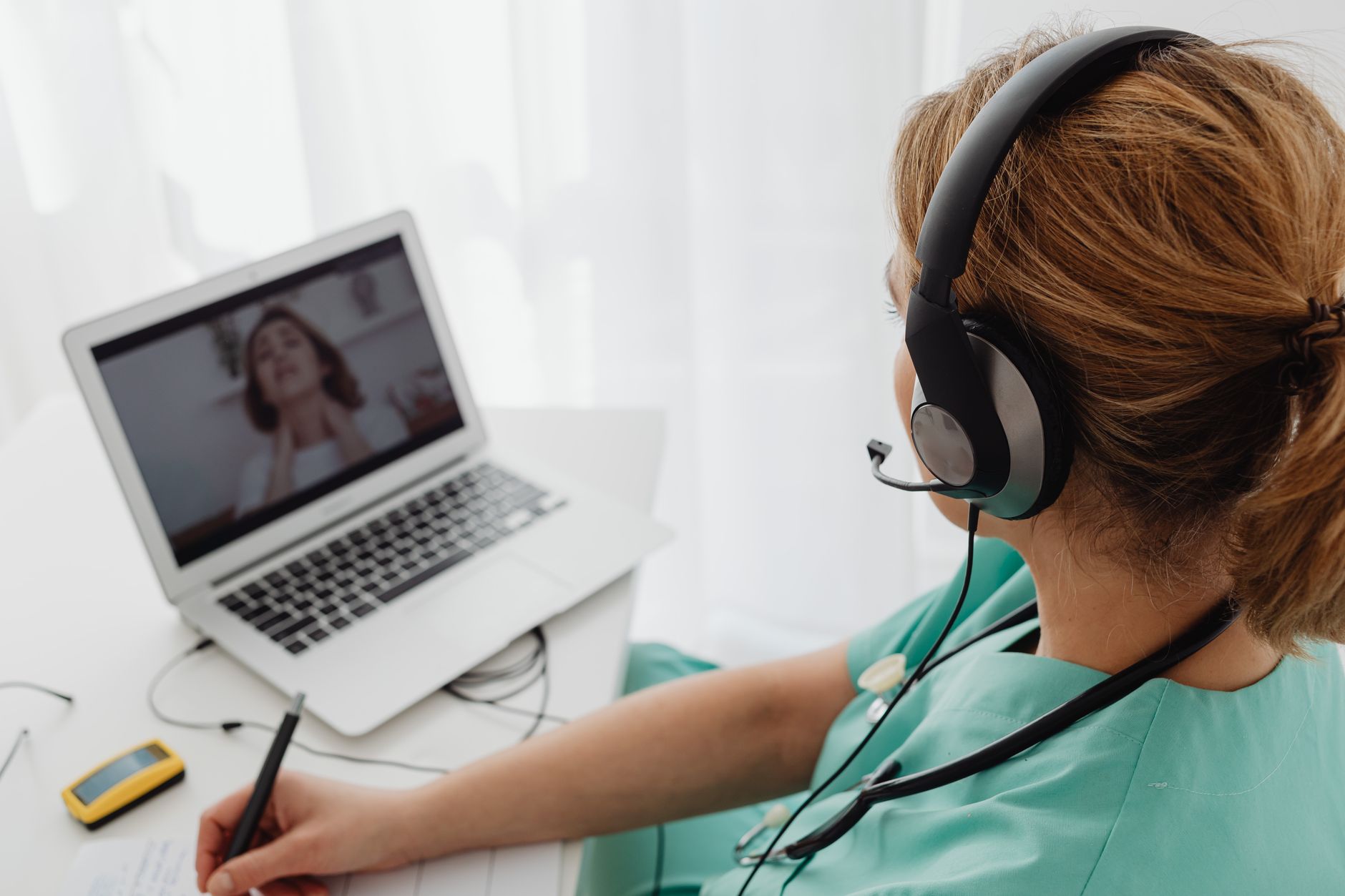
How the Video Consultation Works: From Scan to Shared Screen
The typical journey begins long before you book a ticket. After an initial enquiry, the clinic arranges a structured video consultation. In many cases, you will be asked to submit standardised photographs or, where possible, visit a local imaging partner for a 3D scan. Some Istanbul clinics have developed portable scanning protocols that can be guided remotely, or they work with affiliated centres in your home country to capture high-quality data.
Once the data is processed, your surgeon builds the digital twin and prepares a simulation session. During the consultation, you appear on screen alongside your virtual model. The surgeon rotates, zooms, and modifies the model in real time — adjusting nasal bridge height, projecting breast volume, mapping liposuction contours — while explaining the surgical steps that would produce each change.
This interactivity is the heart of the innovation. You can ask, "What if it were slightly less pronounced?" and see the answer instantly. You can compare two or three simulated outcomes and choose the direction that feels right. Crucially, the surgeon can also demonstrate the trade-offs: additional recovery time, scar placement, or the need for a secondary procedure.
By the end of the session, you have a shared visual reference. The simulation becomes part of your medical record, attached to your consent documentation. When you arrive in Türkiye, there is no ambiguity about the goal.
Better-Informed Consent: The Ethical Power of Seeing First
Informed consent is a cornerstone of ethical surgery, but traditional consent processes rely heavily on verbal description and generic diagrams. Studies across surgical specialties consistently show that patients recall only a fraction of what they are told, and expectations often diverge from reality. 3D simulation directly addresses this gap.
When you have seen a realistic projection of your outcome, your consent is qualitatively stronger. You are agreeing to a visualised plan, not an abstract promise. Turkish clinics that use this technology report fewer post-operative misunderstandings and higher patient satisfaction — not because the surgery is different, but because the expectation is calibrated correctly.
This matters especially for revision surgery and complex reconstruction, where the gap between hope and possibility can be wide. A digital twin allows the surgeon to show what is achievable given existing scar tissue, previous implants, or anatomical constraints. It replaces vague reassurance with honest, visual evidence.
From a medicolegal perspective, the simulation documentation provides both parties with a record of what was discussed and agreed. It protects the patient's right to informed choice and the surgeon's ability to practise responsibly. In Türkiye, this approach is increasingly seen as best practice, not a premium extra.

Practical Benefits for International Patients: Planning with Confidence
The logistical advantages of seeing your result before you fly are substantial. First, trip planning becomes predictable. You know the procedure, the likely recovery timeline, and the number of days you should stay in Istanbul. You can book flights and accommodation with confidence rather than hope.
Second, financial clarity improves. When the surgical plan is visualised, the quotation is more accurate. You can see whether a procedure is likely to require additional stages, and you can budget accordingly. Many clinics provide a written plan alongside the simulation, detailing what is included and what is not.
Third, emotional preparation is easier. Surgery abroad can be anxiety-provoking. Seeing your digital twin and walking through each step with your surgeon reduces uncertainty and builds trust. You arrive in Türkiye already familiar with the clinic's approach, the team's communication style, and the expected course of care.
Fourth, you can involve family or partners. Because the consultation happens on screen, loved ones can join from anywhere. Shared decision-making becomes genuinely shared, not a solo leap of faith.
Finally, the technology supports realistic recovery expectations. Surgeons can show how swelling will evolve, when results will begin to stabilise, and what the intermediate stages will look like. This prevents the common panic that occurs when early post-operative appearance does not match the final simulation.
Why Türkiye Leads in Patient-Facing Surgical Technology
Türkiye's leadership in this field is the product of several converging strengths. The country has a dense ecosystem of internationally accredited hospitals and specialised clinics, many of which treat a high volume of international patients. High volume drives investment in efficiency and communication tools — and 3D simulation is precisely that.
Turkish clinicians are also early adopters. The aesthetic surgery sector, in particular, competes on outcomes and patient experience. Clinics invest in 3D imaging systems, trained simulation technicians, and software licences because they see the direct impact on patient trust and conversion. This competitive dynamic accelerates innovation faster than in more fragmented markets.
Furthermore, Türkiye's medical technology sector and university hospitals collaborate closely. Radiology departments are equipped with advanced imaging, and there is a growing pool of engineers and software developers focused on medical visualisation. The digital twin concept — long used in aerospace and manufacturing — has been adapted thoughtfully to surgical planning by teams who understand both the technology and the clinical reality.
Regulatory oversight also plays a role. Turkish health authorities have moved to standardise advertising and patient communication in medical tourism, and simulation technology supports compliance by making claims more concrete and verifiable. Clinics that simulate responsibly are better positioned to meet ethical and legal standards.
What to Ask During Your Simulation Consultation
To get the most from a 3D planning session, prepare questions in advance. Ask how the digital twin was created and what imaging data it is based on. Ask about the accuracy of the simulation — what it can and cannot predict. A good surgeon will be candid about the limits.
Ask to see a range of outcomes, not a single ideal image. Discuss what happens if healing deviates from the plan, and what revision options exist. Clarify the recovery timeline shown in the simulation and how it applies to your personal circumstances, including your age, skin quality, and general health.
Request that the simulation and the agreed plan be included in your written quotation and consent documents. This ensures continuity when you arrive. If a clinic cannot provide this documentation, treat it as a signal about their communication standards.
Finally, ask about the software and the team behind it. Leading Turkish clinics are proud of their technology and happy to explain it. Transparency here is a marker of overall clinical quality.
The best simulation is not the most flattering one. It is the most honest one.
The Road Ahead: Simulation as Standard of Care
3D surgical simulation and digital twins are moving from premium differentiator to expected standard in Turkish medical tourism. As software becomes more accessible and scanning protocols more portable, more clinics will offer planning sessions as part of the initial consultation. Patients will increasingly expect to see before they decide.
This trajectory benefits everyone. Surgeons gain a clearer communication tool. Patients gain confidence and realistic expectations. The destination gains a reputation for rigour and transparency. Türkiye, already a global leader in medical tourism, is well placed to define how this technology is used ethically and effectively.
If you are considering surgery in Türkiye, ask about 3D simulation early in your research. A clinic that can show you your digital twin — and explain it honestly — is a clinic that respects your intelligence and your trust. In a field where uncertainty is the norm, seeing your plan before you fly is a genuine advantage.
Thinking about treatment in Turkey?
Share your contact details and a verified doctor will follow up with a plan built around you — free, no obligation.